Dishwashers
A guide to the 24-inch built-in Asko dishwashers we repair in San Francisco: models by series, common complaints, F-codes and safe checks…
Drain faults, inlet faults, leaks and F-numbers on built-in 24-inch Asko dishwashers, diagnosed before any part is replaced.
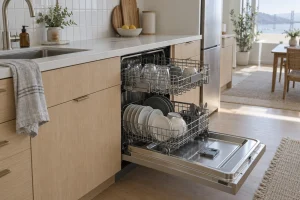
A 24-inch Asko dishwasher is usually built into a tight run of cabinets, often in a renovated flat or a condo kitchen where the panel is flush with the doors beside it. When something goes wrong, the machine rarely announces which part has failed. It stops mid-cycle, leaves a puddle of grey water in the tub, or shows an F-number and waits. Our Asko dishwasher repair work in San Francisco and around the Bay Area starts with that symptom and works backward to the cause.
Standing water after a cycle points toward the drain path: the filter at the tub floor, the drain pump, the drain hose and the connection under the sink. A food scrap in the filter is the common easy case. A kinked hose behind the machine, a clogged disposer inlet or a blocked air gap can look identical from the front. A technician separates these by following the water out of the tub rather than guessing at the pump. The display may show F11, which the code list describes as a water outlet fault, or F68 on machines that use a BLDC drain pump.
A cycle that begins and then pauses with a dry tub suggests the inlet side: the supply valve under the sink, a pinched supply line or the inlet valve itself. F12 and F67 are listed as water inlet faults. The reverse problem, water climbing above where it should, is described by F10 and F54 as overfilling and by F40 as inlet valve leakage. A valve that lets water through while the machine is off is worth a prompt visit, because the water has to go somewhere.
Drying depends on heat, on the final rinse and on the vent. A heating element or its sensor can fail quietly, and F41 is listed as heater fault 1. A dishwasher with no code and a slightly damp load is more often a loading or rinse-aid habit, which we cover in Asko dishwasher dishes not dry.
A leak at the door edge, the base or under the cabinet tells a different story each time: a door seal, a hose clamp, a cracked inlet fitting or a loose drain connection. Grinding usually comes from the circulation or drain pump; F56 is the circulation pump fault. A machine that does nothing may have lost power at the outlet, the breaker or the door latch, and Asko dishwasher won’t start walks through that order.
The visit begins with a conversation. When did the problem start, which program was running, did anything change in the kitchen, was the sink recently worked on. Then the technician reads the model label, checks for a code and watches a short cycle if the machine will run. Only after that do panels come off.
You get a written estimate before any repair begins, and nothing is replaced until you approve it.
Asko dishwashers display F-numbers. The meanings we work from are short, and each has its own page with owner checks:
A code names the area where the control board saw a problem. It does not name the part that failed. An outlet fault can be a pump, a clog or a hose, and we treat it that way. Our overview of Asko dishwasher error codes lists them together.
Many San Francisco kitchens have a dishwasher that was fitted into an older cabinet run, and the plumbing around it matters as much as the machine.
These stay on the outside of the machine. Read the code on the display and write it down exactly. Confirm the machine has power: the breaker, and the switch or outlet under the sink if there is one. Close the door firmly and look for anything caught in the latch or the seal. Open the water supply valve fully. Check the supply and drain hoses where you can see them for a kink. Clean the filter in the tub floor and clear any debris from the drain screen. A single controlled power reset, off at the breaker and back on after a short wait, can clear a one-time glitch.
Do not remove the kick plate or side panels, do not probe wiring, and do not try to jump the door switch.
Stop the machine and shut off the supply valve if water appears on the floor, if the unit keeps filling after the cycle ends, or if you smell something burning. If you smell burning or see sparks, switch the dishwasher off at the breaker. Running a leaking machine to see whether it gets better is how a small repair turns into a damaged cabinet base and subfloor.
The model label tells us which parts and which code list apply. It is usually on the door edge or along the inner tub rim. Asko dishwashers in the families we service include units such as the Asko DBI564 repair and Asko DFI564 repair, which site records place in the 40 Series, and the Asko DBI776 repair, listed in the 60 Series. The Asko DFI664 repair is a model no longer sold new, and we still service it. If you cannot find the label, how to find your Asko model number shows the usual places.
Visits cover San Francisco and the wider Bay Area; tell us in advance about long stairs or building access.
For the full lineup and what the model label looks like, see Asko dishwashers. If your problem is a specific symptom, start with Asko dishwasher not draining, Asko dishwasher leaking water or Asko dishwasher not filling with water.
Standing water points to the drain path, which includes the filter, drain pump, hose and the sink connection. Clean the filter first. If water stays, the cause may be a pump, a clog, a kinked hose or a disposer plug left in place, and a technician can tell them apart.
Write the code down first. If the code points to overfilling or inlet leakage, stop the machine and close the supply valve. For other codes, one controlled reset is fine, but repeated codes deserve a visit rather than repeated cycles.
Yes. Tight cutouts and snug hoses are routine on our visits, and we check what sits behind the machine as part of the diagnosis.
Yes. You receive a written estimate after the diagnosis and nothing is replaced until you approve it.
The model number from the door edge or tub rim, the exact code on the display, what the dishwasher did when it stopped, and whether the sink or disposer was recently worked on.
A guide to the 24-inch built-in Asko dishwashers we repair in San Francisco: models by series, common complaints, F-codes and safe checks…
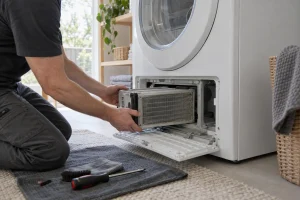
Vented and heat pump Asko dryer repair across San Francisco and the Bay Area: slow drying, filters, condensate trouble, door and sensor…
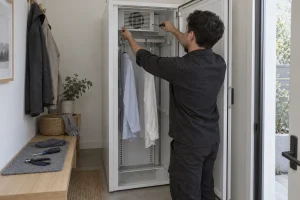
Repair for Asko drying cabinets in San Francisco homes: damp garments, moisture sensor and water tray codes, airflow and placement problems, written…
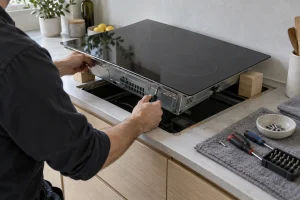
Asko induction cooktop repair across San Francisco: dead zones, pans not detected, shutdowns and unresponsive controls, with diagnosis first and your approval…
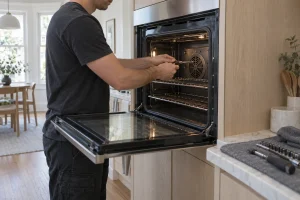
Asko wall oven and combi-steam oven repair across San Francisco: no heat, uneven baking, weak steam and door faults, with a written…
Share a few details and we’ll confirm an appointment. Prefer to talk? Call us and we’ll help right away.