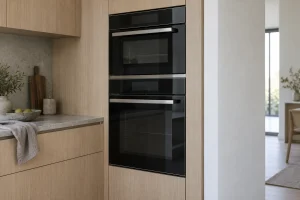
Wall Ovens and Combi-Steam Ovens: Guide and Repair
Asko wall ovens and combi-steam ovens in Bay Area kitchens: the listed model, where the label sits, common faults and safe owner…
From an oven that will not heat to a steam oven that will not steam, we diagnose first and explain the findings in plain language.
A built-in oven has to do two jobs quietly and reliably: hold a temperature and make food come out as expected. When it stops doing either, the symptoms are easy to see and hard to trace, because the heating elements, sensors, fans, door latch, control board and, on a steam model, the water system all share one cavity. Asko wall oven repair in San Francisco covers built-in and combi-steam ovens that live in remodeled flats, condo kitchens and in-law units, usually in a tall cabinet with little room around them.
No heat can come from a failed element, a sensor that misreports the cavity temperature, a control board that never calls for heat, or a power problem upstream. Uneven results, such as burned edges and a pale middle, often implicate a fan that is not circulating air or a door that does not seal. Compare what you see with Asko wall oven not heating, where the checks are laid out in order.
A combi-steam oven adds a water supply or tank, a steam generator, a pump and a drain path. Faults here look like weak or absent steam, water in the wrong place, a message about the tank, scale deposits, or a steam smell that was not there before. Hard water is a factor in many Bay Area kitchens, and scale build-up in the steam path is a common reason a steam oven underperforms. Our post on Asko steam oven problems goes further.
A door that does not close fully, a hinge that has slackened, or a latch that will not release can stop the oven from starting or leave it locked. A display that goes dark, resets by itself or ignores touches suggests a control or power issue. A fan that squeals or rattles during cooling after use can mean a failing bearing.
A faint odor during the first few uses of a new oven is common. Smoke from spilled food on the floor of the cavity is a cleaning problem. A sharp electrical smell, crackling or visible sparks is not: switch the oven off at the breaker and leave it off.
We begin with what happened: the setting you used, whether the oven preheated, whether a fan ran, what the display showed and whether the problem began suddenly or crept in. Then we check the supply, the way the oven is installed, the door and its seal, and the cavity itself. Only after that does the technician open anything, and only with a clear reason. A good diagnosis explains the fault in plain language so that a written estimate makes sense to you.
Wall oven displays can show fault messages, and the wording depends on the model. We do not publish a code table for ovens. Write down exactly what the display showed, take a photo if you can, and tell us what the oven was doing at the time. That description is enough to start.
The cutout and the cabinet around it matter more than people expect. A built-in oven needs the dimensions in its installation sheet, a supporting shelf that is level and sturdy, and clearance behind for airflow and cabling. When the oven sits tight in a tall cabinet, heat that cannot escape can make the cooling fan run constantly or cause the oven to shut down during long bakes. A trim panel or cabinet door too close to the oven face can warm up and warp. A wall oven stacked above a warming drawer or below a microwave needs the gap the installer’s instructions require.
The circuit is another factor. Older San Francisco buildings may have shared or aging wiring, so a failure that looks like an element fault may be a loose connection or an undersized feed. A steam model also needs its water arrangement to be correct: a clean supply, a hose that is not kinked, a tank that seats fully and a drain path that is clear. If your oven was moved in a remodel, tell us who installed it.
Do not remove back or side panels, reach into the cavity while the oven is hot, test live wiring, or attempt to bypass a door switch. If a flare-up occurs, keep the door closed and switch off at the breaker. If you smell gas anywhere in the kitchen, leave the home, touch no switches, and call the gas utility or 911 from outside.
Stop when you smell burning, see smoke that is not from spilled food, notice sparks, find the door glass cracked, or have an oven that heats on its own with no control. A dull but working oven can wait for a booked visit, though baking with an uneven oven wastes food and encourages guesswork.
Elements, fans, sensors and steam components differ between models, so the same symptom can lead to different parts. The label is usually on the oven door frame; our model number guide shows other likely places. The oven in our library is the OCS8687S, a Celsius combi/steam oven that is currently sold. Photograph the label before the visit.
You describe the fault, and the technician confirms it and checks the installation. Diagnosis comes before repair, a written estimate follows, and nothing is repaired without your approval. See our Asko wall ovens page for the lineup and our repair or replace guide if you are weighing a larger repair.
The display and light run on a different path from the heating. Common causes include a failed element, a temperature sensor reporting wrongly, or a control board that never calls for heat. A technician diagnoses which before anything is replaced.
Look at the water tank and hose first: it should be filled, seated and free of kinks. If those are fine, scale in the steam path or a faulty pump or generator may be at fault, and that needs a technician.
A cooling fan commonly runs for a while after use to protect the electronics and cabinetry. If it runs constantly, grows loud or the oven shuts down on long bakes, ventilation behind the oven may be restricted.
Yes, when the oven is cold and switched off, wipe spills from the floor and remove loose foil. Do not remove panels or touch sensors. Clean and dry the control panel gently.
It helps. The label is usually on the door frame, and the model decides which elements and steam parts are involved. If you cannot find it, we confirm at the visit.
Asko wall ovens and combi-steam ovens in Bay Area kitchens: the listed model, where the label sits, common faults and safe owner…
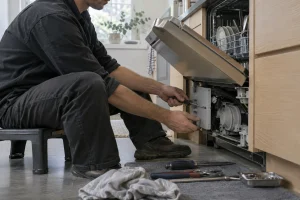
Diagnosis and repair for 24-inch built-in Asko dishwashers across San Francisco and the Bay Area, from drain faults and F-codes to leaks…
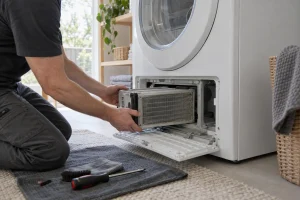
Vented and heat pump Asko dryer repair across San Francisco and the Bay Area: slow drying, filters, condensate trouble, door and sensor…
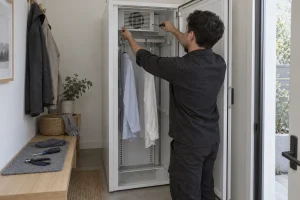
Repair for Asko drying cabinets in San Francisco homes: damp garments, moisture sensor and water tray codes, airflow and placement problems, written…
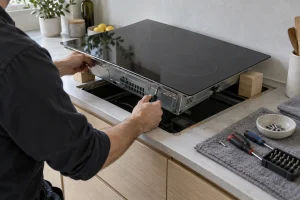
Asko induction cooktop repair across San Francisco: dead zones, pans not detected, shutdowns and unresponsive controls, with diagnosis first and your approval…
Share a few details and we’ll confirm an appointment. Prefer to talk? Call us and we’ll help right away.