Induction Cooktops: Models, Faults and Repair
Asko induction cooktops in Bay Area kitchens: the two listed models, where the plate sits, common faults and the safe checks to…
When a zone stays cold or the pan is rejected, the fault may be the cooktop, the circuit or the cookware. We sort out which before anything is repaired.
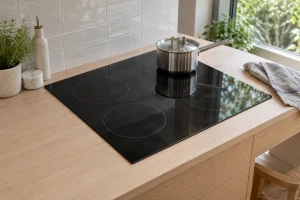
An induction cooktop heats the pan rather than the glass, which makes it fast, tidy and unforgiving when something goes wrong: the surface looks perfectly normal while a zone refuses to heat, a pan is rejected, or the whole top shuts down mid-sauce. In San Francisco these cooktops are common in renovated Victorian and Edwardian kitchens, condo remodels and compact in-law unit kitchens where a European-style induction top replaced a gas range. Asko cooktop repair on this site means diagnosing induction cooktops, and the first question is always whether the fault is in the cooktop, the circuit feeding it, or the cookware on top.
Each zone has its own power electronics and a coil beneath the glass. If one zone is dead while the others work, the cause is usually local to that zone: the coil, its driver electronics or a temperature sensor under the glass. If every zone is dead, look at the supply instead: a breaker, a loose connection in the cabinet below, or the control electronics themselves. Our guide Asko induction cooktop not heating works through the order we check these in.
Induction only heats a pan that is magnetic and sits properly on the zone. A pan with a warped base, a pan that is too small for the marked zone, or aluminum and glass cookware that is not induction-ready will be rejected, and the cooktop will usually indicate that it does not see a pan. When a pan that used to work is suddenly rejected, the cause may be the sensing circuit rather than the pan. See Asko induction cooktop pan not detected for a fuller breakdown.
The cooktop protects itself. Spilled liquid across the touch controls, a cooling fan that cannot move air, or a blocked ventilation path under the unit can make it stop and sound a warning. Touch panels also respond to a damp cloth, a pot lid resting near them or a film of grease, so a top that seems to press its own buttons is often reacting to something on the glass. Cracked glass is a separate matter: stop using the cooktop at once, because liquid can reach the electronics.
Induction is not silent. A faint hum or buzz at high power, especially with thin cookware, is normal behavior. A fan that grows louder, a rattle, a crackle or any burning smell is different. A burning smell or sparks means power off at the breaker and a technician before further use.
Cooktop displays flash signals when they detect a problem, and what they show depends on the model. We do not list a code table for cooktops, because the useful information is what you saw, when it happened and whether it came back after a controlled power reset. Write down exactly what the display showed, which zone was in use, what cookware was on it and what you were cooking. A photo of the display helps. That detail lets the technician narrow the fault before arriving.
An induction cooktop needs a dedicated circuit sized for the unit, a cutout that matches the dimensions in the installation sheet, and free space underneath for the fan to draw air. In San Francisco kitchens the common problems are specific. A drawer or pot rack installed directly below, with items pressed against the underside, blocks the cooling path. A cabinet cutout that was cut slightly large lets the top sit unevenly, which can stress the glass edge. Older buildings sometimes have shared or aging wiring, so a loose lug in a junction box can look like a failed cooktop. A cooktop installed next to a wall oven or near a sink must also leave the gaps the installer’s instructions require. If your cooktop was moved or replaced during a remodel, tell us who did the work and what changed.
Do not lift the cooktop, open its housing, test the connection block, or run the cooktop with cracked glass. If anything smells of burning or you see sparks, turn the breaker off and leave it off.
Stop at once for cracked or chipped glass, visible scorching, a burning smell, sparks, or a unit that keeps switching itself on. Stop and book a visit for a zone that heats unpredictably, because uneven heat is more likely to burn food and damage cookware than a dead zone is. A cooktop that simply rejects one old pan does not need urgent attention, but a pan that has started to be rejected on every zone does.
Induction cooktops differ in zone layout, size and electronics, so the parts behind the same symptom differ too. The label is usually under the cooktop or listed in the installation papers; our model number guide shows the usual places. Cooktops in our library include the HI1995G, listed at 36 inches (90.4 cm), and the HI1655G. Reading the label before the visit saves time.
We confirm the symptom, check the supply and the way the cooktop is installed, and test with suitable cookware. Diagnosis comes before any repair, and you receive a written estimate listing the part and the work. Nothing is done until you approve it. When the problem turns out to be cookware or a ventilation path, we say so and leave the cooktop untouched. Our Asko cooktops page covers the lineup, and repair or replace sets out how to weigh a bigger repair against a new unit.
Induction needs a magnetic base that sits flat and covers enough of the zone. A warped, small or non-magnetic pan is rejected. If the same pan works on another zone, the first zone may have a sensing fault; a technician can confirm.
Not necessarily. A single dead zone usually points to that zone’s coil or electronics, while the rest of the cooktop can carry on. Use the working zones carefully and book a diagnosis rather than forcing the dead one.
A soft hum or buzz at higher power is a normal part of induction, more so with thin or lightweight pans. A growing fan noise, rattle or crackle is different and worth having checked.
Cracked glass means stop using it immediately and switch off the breaker, because liquid can reach the electronics. A technician assesses whether the damage is limited to the glass or reaches the parts beneath.
Induction cooktops need a supply suited to the unit and its installation sheet. If the cooktop trips a breaker or loses power during use, the circuit and its connections are part of what we check.
Asko induction cooktops in Bay Area kitchens: the two listed models, where the plate sits, common faults and the safe checks to…
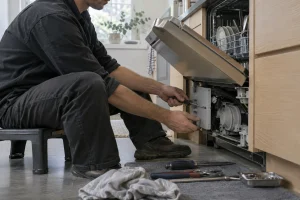
Diagnosis and repair for 24-inch built-in Asko dishwashers across San Francisco and the Bay Area, from drain faults and F-codes to leaks…
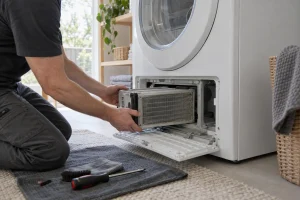
Vented and heat pump Asko dryer repair across San Francisco and the Bay Area: slow drying, filters, condensate trouble, door and sensor…
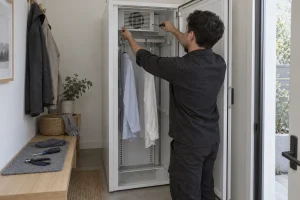
Repair for Asko drying cabinets in San Francisco homes: damp garments, moisture sensor and water tray codes, airflow and placement problems, written…
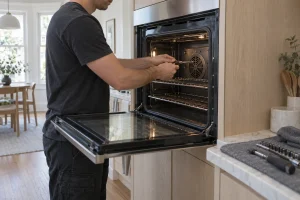
Asko wall oven and combi-steam oven repair across San Francisco: no heat, uneven baking, weak steam and door faults, with a written…
Share a few details and we’ll confirm an appointment. Prefer to talk? Call us and we’ll help right away.