

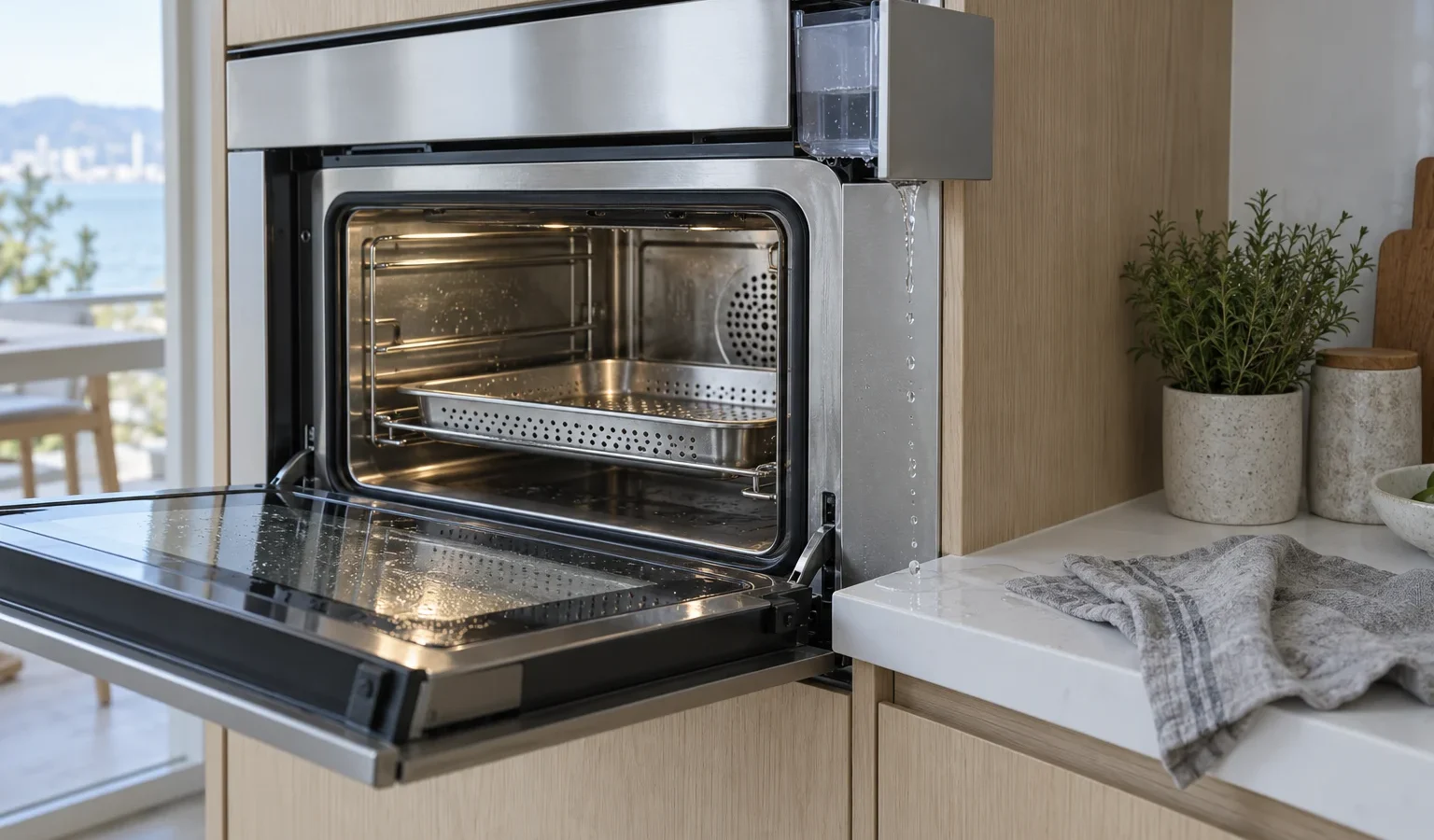
A combi-steam oven adds water, a steam generator and extra seals to an ordinary oven. This guide covers the common complaints and the checks that are safe to make.
A combi-steam oven is a more complicated machine than a plain oven. Besides the heating elements and fan, it has a water supply, a steam generator, a path for steam and condensation, and seals that must keep the moisture where it belongs. In our library the OCS8687S is listed as a combi/steam oven in the Celsius series, still sold new. Whatever your model, the same logic applies to problems: separate the heat side from the steam side, then follow the water.
Run a simple test. Use a plain heating mode with no steam and see whether the oven comes up to temperature. If it does not, the trouble is on the heat side, and our guide to a wall oven not heating is the better starting point. If it heats but the steam modes disappoint, the water side is the place to look, and the rest of this article stays there.
Steam needs water, and the oven needs to be able to heat it. Depending on how your oven is installed, water arrives from a removable container that you fill or from a plumbed supply. In either case, a missing supply is the simplest explanation. If your oven uses a container, check that it is filled, seated firmly and not cracked. If it uses a plumbed line, check that the shutoff valve to the oven is open and that the flexible line is not kinked. Beyond that, a steam generator coated in mineral deposits heats poorly and produces little steam, and a pump or valve that fails to move water leaves the generator dry. These are technician items.
A musty smell after a steam cycle usually means moisture is left in the cavity and the oven was closed too soon. Wipe the cavity with a soft cloth when cool, leave the door open for a while, and the smell often disappears. A chalky film on the cavity or a taste of minerals in food points to hard water. San Francisco water is generally soft, yet elsewhere in the Bay Area it varies, and buildings with older plumbing can add their own character. A technician can check the generator for deposits and advise on how your water supply affects the oven.
Steam ovens depend on a door that closes fully and evenly. A seal that is worn, flattened or torn, or a door that sits slightly crooked, lets moisture and heat escape. You can check the seal visually: run a finger along it with the oven cold and off, looking for splits, hardened spots and food. Keep the door area clean and free of burnt-on material. If the door does not shut with a firm feel, or the oven refuses to start because it thinks the door is open, stop and book a visit.
Our library does not list fault codes for the combi-steam oven, so we do not offer a code table for it. If your oven shows a message or number, copy it exactly, note what the oven was doing, and tell us. Many messages relate to water: low level, supply, descaling reminders. A reminder to descale is not a fault, though ignoring it for long can create one. Do not run unusual cleaning products through the generator without checking what your oven allows.
Combi-steam ovens in Bay Area homes are often fitted in a tall cabinet column in a remodeled kitchen or an in-law unit, with a plumbed supply added at the time. The cutout must be square and ventilated, and the water line must be accessible. A line that is crushed by the cabinet or an oven pushed back too far against a rigid supply causes trouble that looks like a steam fault. If you recently had cabinetry work, tell us about it.
Do not remove the oven from its cabinet, loosen fittings or open covers. If you smell gas on a gas-supplied kitchen, or see sparks, leave and switch off power at the breaker.
We diagnose first, give a written estimate and wait for your approval before any repair. Have the oven model ready and note whether the water comes from a container or a plumbed line. Start from the Asko wall oven repair page, read more about Asko wall ovens, and if you cannot find the label, see how to find your Asko model number.
Some condensation is. A pool that keeps growing or lingers suggests a drainage or evaporation issue.
The cause is usually a water supply issue, mineral deposits on the generator, or a part that moves the water. Check the container or valve, then book a visit.
Steam ovens collect mineral deposits over time, and many ask for descaling. Follow what your oven asks for and do not improvise with strong chemicals.
Yes. A worn or dirty seal lets steam and heat escape, and may leave water at the door edge.
Our library lists none for this oven, so write down any message exactly as shown and tell us when you book.
Share a few details and we’ll confirm an appointment. Prefer to talk? Call us and we’ll help right away.