

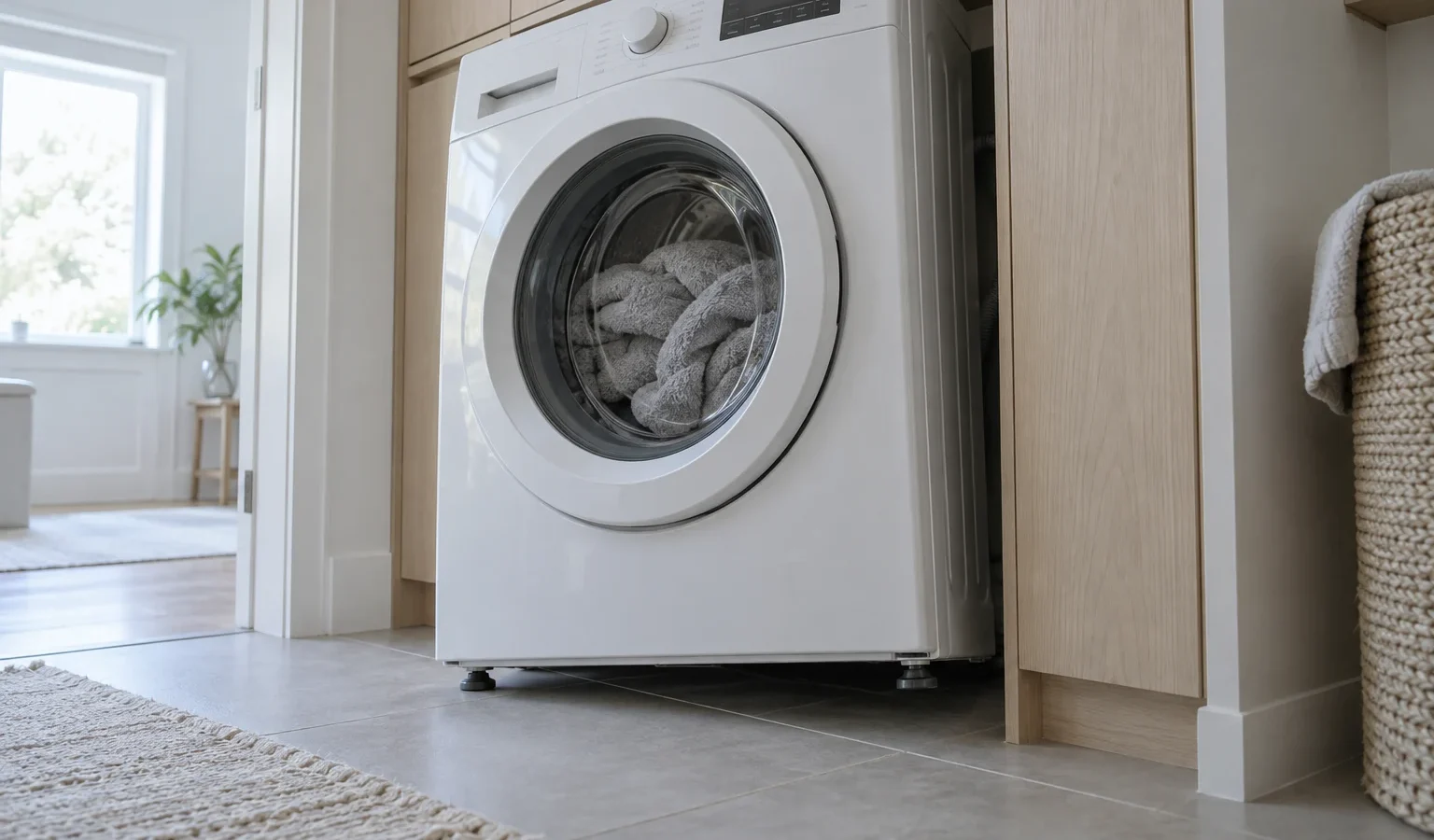
A washer that bangs, walks across the floor or stops mid-spin is usually reporting an unbalanced drum or an unlevel base. Here is how to sort out which one.
Every front-load washer shakes a little as it accelerates through the spin. What should not happen is loud banging, a machine that creeps toward the wall, or a cycle that stops and starts again because the drum cannot settle. When an Asko washer behaves like that, the issue is either how the laundry sits in the drum, how the washer sits on the floor, or, less often, something worn inside. This guide takes those in the order that is quickest to rule out.
The sound and timing tell a lot. A rhythmic thump that builds as the spin speeds up usually means the load is lopsided. A steady rattle on a wooden floor often means the washer is rocking on one foot. A grinding or rumbling noise that continues after the drum slows down is closer to a wear problem. And a cabinet that visibly leans or taps against a wall or a stacked dryer means the feet need attention.
The washer measures the drum as it spins up and stops the cycle when one side is much heavier. The library entry for E13 reads as unevenly distributed laundry. Typical triggers are a single wet towel, a heavy sweatshirt balled up with a few light items, or a comforter that has folded onto itself. Pause the cycle, open the door when it releases, shake the items apart and mix heavy with light, then restart the spin only. Washing one bulky piece alone is the surest way to produce the thump.
An uneven base amplifies every imbalance. Stand at the front, look across the top and push down on each corner in turn. If the cabinet rocks, one of the adjustable feet is too short or too loose. Use a level on the top and adjust the feet so the machine rests firmly on all four corners, then tighten the lock nuts if the feet have them. Many older San Francisco buildings have floors that slope toward the street or the middle of the room, so the machine may need a surprising amount of adjustment. In a stacked washer and dryer pair, leveling matters more, because the dryer above magnifies any movement.
Washers on a springy wooden subfloor shake more than those on a solid slab. In Victorians and Edwardians divided into flats, the laundry nook often sits over joists that flex. You can reduce movement by placing the washer where the floor is stiffest, or by asking a contractor about a plywood pad. Soft mats under the feet can make things worse by letting the washer bounce. A second look at the floor before blaming the machine saves a lot of trouble.
If the washer was installed recently, a shipping bolt or a foam block left in place can make the drum bang as soon as it speeds up. Ask whoever installed it, or check the original paperwork, for the number of transit fixings that had to be removed. We would rather you confirm that than open the back of a new machine yourself. If you cannot tell, book a visit and mention the install date.
A washer that shakes with a small balanced load on a level floor is no longer a user issue. Persistent shaking can come from worn suspension parts, a damaged support for the tub, or bearings wearing out, and those noises tend to be present at every speed and every load. Some motor and drive faults also show up as roughness, with E12 in the library meaning a motor error and F2 meaning a problem with the motor. A technician will diagnose the cause rather than guess from sound alone.
Do not stand a child or a pet near a washer that is banging. Do not wedge folded cardboard under one corner as a permanent fix; it compresses and the washer will walk again. Do not open the back panel to look at the suspension. And if you smell burning or see sparks, shut off the breaker and leave the washer off.
Asko washers are 24 inches wide, which is why they appear in hall closets and kitchen alcoves in condos and flats. A narrow opening means little room for the washer to move without touching something, so even mild vibration rattles the closet. Keep a small gap on all sides if you can, and make sure the hoses are not crushed behind the machine. If the closet door or the wall panel hums while the washer spins, the washer is probably fine and the surrounding structure is the amplifier.
If leveling and load balancing do not calm the machine, the next step is a diagnosis. We confirm the cause before repairing, provide a written estimate, and repair only what you approve. Details are on the Asko washer repair page, and the Asko washers guide lists the families we see. Have the model number ready from the door opening, for example the W6098X.S/3, a 7-series washer, and describe when the shaking begins.
A little vibration is normal. Banging, walking across the floor or stopping with an imbalance code is not, and usually points to load balance, leveling or the floor.
Often. Make sure all four corners carry weight and the lock nuts are tight. If the washer still shakes with a small balanced load, the cause may be inside.
Towels absorb a lot of water and clump into one heavy mass. Mix them with lighter items so the weight spreads around the drum.
It can, because the dryer sits on top of the washer and exaggerates movement. Good leveling and a stiff floor matter more in a stacked pair.
When it happens with small balanced loads on a level floor, comes with grinding noises, or appears together with a motor-related code on the display.
Share a few details and we’ll confirm an appointment. Prefer to talk? Call us and we’ll help right away.