

A sour, musty or swampy odor from a front-load washer usually traces back to trapped moisture. Learn where it hides and what to clean before you call.
A sealed, front-loading drum is built to keep water in during the cycle, and that same tight seal keeps humid air in afterward. When a washer starts to smell like a damp basement, sour milk or a drain, something is staying wet or sitting still. The smell is the symptom; the cause is usually one of a handful of places a technician checks, and a few of them you can handle yourself.
Different odors point in different directions, so smell the machine with the door open before you start cleaning.
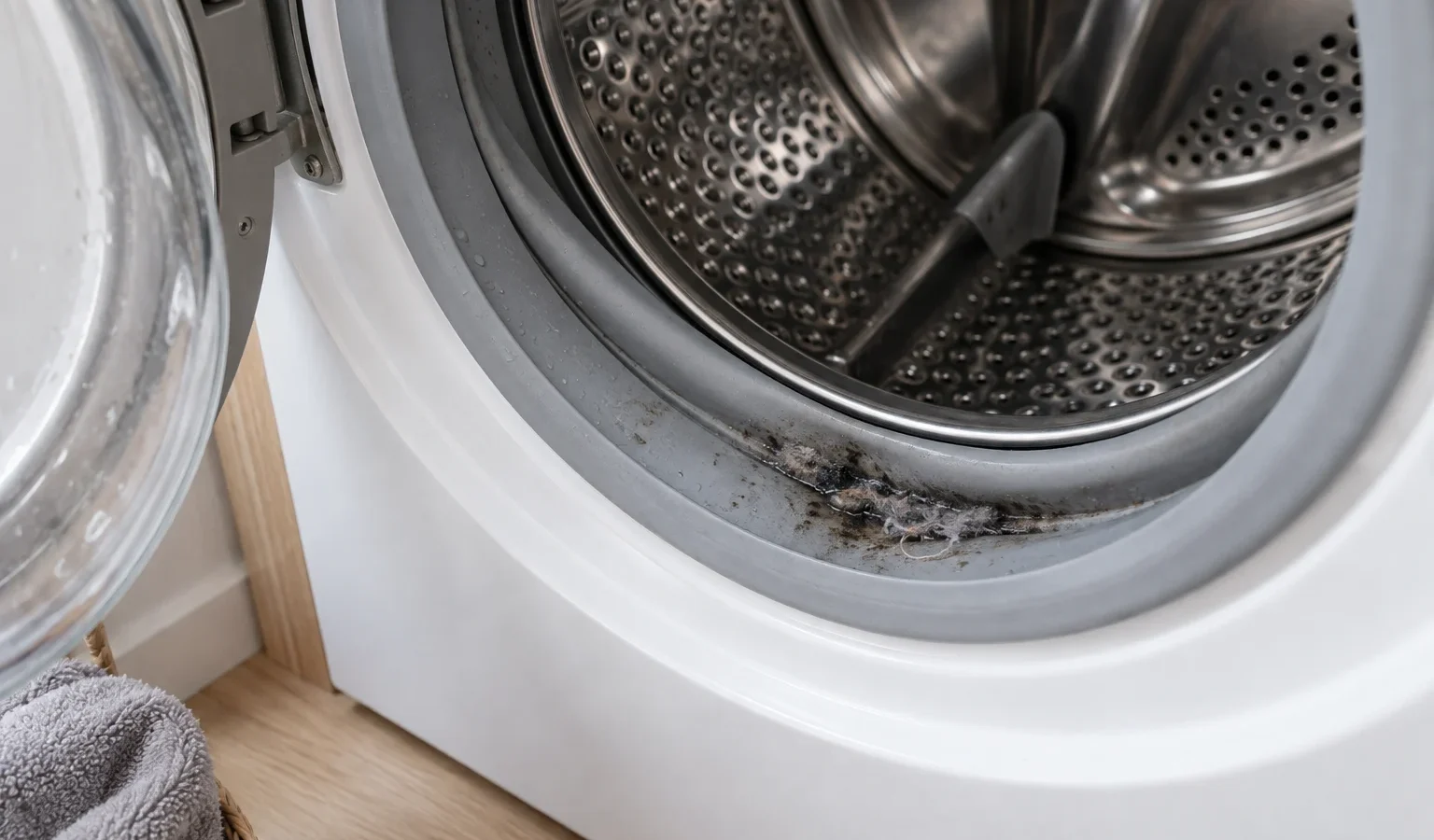
The rubber ring around the opening has a deep fold at the bottom where water collects after every wash. Lint, hair, detergent and tiny bits of fabric settle there and feed odor. Pull the fold open and look all the way around. Wipe it out with a cloth and a mild household cleaner, dry it, and look for coins, hair ties or socks hiding in the crease. If the rubber looks torn, blackened beyond cleaning, or feels sticky and soft, tell the technician when you book; a damaged seal can leak as well as smell.
This is the habit that fixes more washer smells than any product. Closing a wet drum for a day or two creates exactly the conditions odor needs. Prop the door open after the last load, pull the detergent drawer out slightly if it slides, and let air move through the tub. In a flat where the washer lives in a closet, also leave the closet door ajar so the humid air can leave the space.
More detergent does not mean cleaner clothes in a compact front-load machine. Excess suds hold soil in the fabric and leave film inside the tub and hoses. The code library lists E7.2 as an excessive amount of detergent, which tells you the machine itself notices when suds run too high. If your washer smells sour and you pour generously, reduce the dose and use a product made for high-efficiency front-loaders. Our article on Asko washer too much foam goes deeper into that side of the problem.
Lint, coins, pocket debris and soap residue gather in the drain pump filter, and the small amount of water that stays with it can turn foul. Many Asko washers have an access flap near the bottom front. Place a flat tray and towels under it, loosen the filter slowly and let the water come out, clean the filter, then refit it fully so it seals. Skip this step if you cannot find the flap or the filter will not turn; forcing it can crack the housing. A filter that is packed solid is also a reason the washer may drain slowly, as described in our Asko washer not draining article.
If the odor reads as sewer rather than damp, check where the drain hose ends. A hose pushed deep into a standpipe, or one sealed tightly around the pipe with no air gap, can let sewer air travel back or keep water siphoning in the wrong direction. In older San Francisco buildings the standpipe is often shared or tucked in a wall behind the machine, so what you see is only part of the drain path. If the smell is strongest at the wall and not inside the drum, a plumber or a technician looking at the drain arrangement is the right next call, not another round of cleaner.
If the smell returns within a few loads of clean laundry, the odor is probably coming from somewhere you cannot reach with a cloth.
Do not mix cleaning products, especially bleach with anything acidic or ammonia-based, and never run them together in the drum. Do not take the front or rear panel off to chase the smell. Do not pour solvents or oils into the tub. If the washer is leaking from the seal or tub area, the code library lists E9 as a water leak detected in the appliance area, and that is a repair matter rather than a smell matter.
Standing water left in the drum after a cycle, a drain that gurgles, a drain filter that fills again immediately, or a rubber seal that is damaged all deserve a diagnostic visit. A burning or electrical odor means power off at the breaker and a visit as soon as you can schedule one. We diagnose before repairing, provide a written estimate and repair nothing without your approval. The Asko washer repair page explains how that visit runs, and the Asko washers overview lists the washers we see in the Bay Area.
When you book, mention the model number, usually found at the door opening. A current 24-inch example is the W2084.W.U, a 3-series (Classic) washer. Tell us which cleaning steps you already tried and which odor you noticed, since that shortens the diagnosis.
A front-loader seals tightly and keeps a rubber gasket full of damp folds. If the door stays shut, moisture lingers and odor builds. Leaving the door open between loads usually prevents it.
Follow the label of a cleaner made for front-load washers and never combine products. Mixing bleach with acidic or ammonia-based cleaners can release harmful fumes.
If you can reach the access flap, have a tray and towels ready and clean it slowly. Stop if the filter will not turn or water keeps running, and book a visit instead.
It can be. Damp flooring, a wet gasket area or a leak code on the display should be mentioned when you book, because a leak is a repair issue.
We look for the source, such as standing water, a failing drain path or a damaged seal, and give you a written estimate before any repair.
Share a few details and we’ll confirm an appointment. Prefer to talk? Call us and we’ll help right away.