

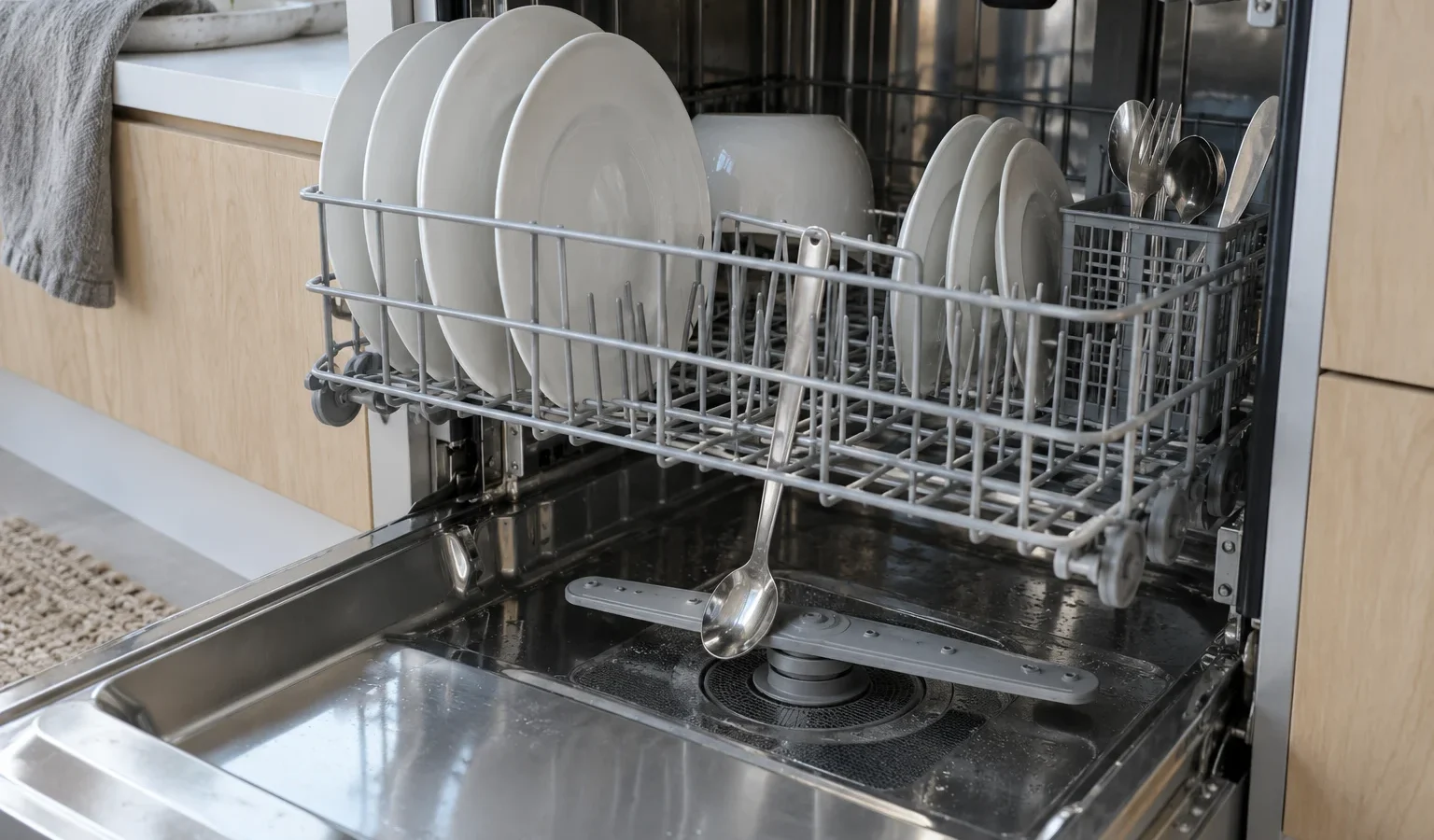
A noisy Asko dishwasher is telling you which part is in trouble. Grinding, buzzing, clicking and rattling each have different usual causes. Here is how to read them.
Most owners of a quiet 24-inch dishwasher know its normal sounds well: the fill, a soft spray, a gentle change as the pump drains. When a harsh new noise appears, the mind goes straight to the worst, but sounds are diagnostic. The kind of noise, when it occurs in the cycle and whether it changes with the load narrows the cause considerably.
Pay attention to when the noise starts. Noise during the first minutes, while water enters, can come from the supply line shaking in a tight cabinet. Noise while the sprayers run points to the spray arms, the circulation pump or something in the tub. Noise at the end, when the machine empties, points to the drain pump or to hard items caught in the sump. A noise that begins only at the heated drying stage can be an expanding panel or a part that moves as it warms.
If the noise comes with an F-number, our reference gives a head start. F56 is a circulation pump fault, which fits a pump that is humming, laboring or silent. F68 is a BLDC drain pump fault for the DBI564 series, and F45 is a diverter fault, which can show as clicking while the machine decides where to send water. Our guide to Asko dishwasher error codes lists the others.
Dishwashers in older Bay Area flats are often fitted into cabinets that flex, on floors that are not quite level, with hoses that touch the sides of the cutout. A hose pressed against a cabinet wall transmits vibration like a drum. A machine that rocks slightly on its feet makes a thump as the pumps start. A supply line with no slack on a rigid pipe sends a hum through the sink base. Fixing those is an installation adjustment: levelling the unit, padding or rerouting the hose, and securing the machine to the cabinet. It is a normal part of a diagnosis visit and often solves the complaint without any part.
Book when the noise remains after the filter and spray arms are clear, when a pump code appears, when the machine hums but does not wash or drain, or when a squeal grows louder cycle by cycle. A pump that runs rough often has little life left, and replacing it early limits the chance of a flood or a half-washed load. We diagnose before repairing, give a written estimate and wait for approval. The technician will read the model number from the door edge or tub rim, since the pumps vary by family; the 50 Series DBI565 and the 60 Series DBI776 are two of the families in our library. See Asko dishwasher repair and the Asko dishwashers guide for more.
When you call, a short description is worth more than the word “loud”. Say whether the noise is rhythmic, tracking the spray arm turn, or constant; whether it happens in every program or only the heavy one; and whether it began suddenly or crept up over weeks. Sudden noise usually means something has moved or broken, while a slow increase suggests wear in a bearing. If you can, record a short audio clip on your phone near the door edge. A clip is easy to share and lets the technician recognize a failing pump before arriving, which can mean the right part is on the van.
Most of the time, yes. A utensil or lid fallen to the bottom is the most frequent cause. If the tub is clear and the spray arms are free, look at the installation next.
The pump may be blocked or failing. Clean the filter first. If the hum continues, switch off and book a diagnosis.
A grinding sound caused by hard debris can score the pump housing, and a failing bearing gets worse. Stop the cycle and have it checked.
A full rack changes how water hits dishes and how items vibrate against each other. If the noise is only present with certain loads, adjust the layout before suspecting a fault.
No. Many are fixed by clearing a stray item, cleaning the filter or levelling the machine. The diagnosis tells you which.
Share a few details and we’ll confirm an appointment. Prefer to talk? Call us and we’ll help right away.